Every Tsavo safari is built around you
Tell us your dates and whether it's East, West or both you're after. Alex designs the route, the camp and the river positioning — personally.
The largest national park in Kenya. Red elephants, vast open wilderness, and a genuine alternative to the crowded circuit.
At over 20,000 square kilometres, Tsavo is bigger than Wales and nearly twice the size of the Maasai Mara ecosystem — a continuous wilderness from the Galana river system to the volcanic Chyulu Hills.
Its elephants are most famously distinguished by the red laterite soil that coats their skin as they dust-bathe, giving them a distinctive ochre-red colouration found nowhere else. Its lions are larger, more muscular, and often maneless.
What Tsavo offers that the Mara cannot is scale and solitude. On a good day you can drive for an hour without seeing another vehicle — not managed, not curated, not optimised for the game drive.
Tsavo's elephants dust-bathe in iron-rich laterite soil that stains their grey skin a vivid red. In the dry season the colouration is at its most intense — a spectacle found nowhere else in Africa.
A significant proportion of Tsavo's male lions are maneless or have reduced manes — and they are noticeably larger and more muscular than their Mara counterparts. The 1898 man-eaters were Tsavo lions.
Tsavo is where I take guests who want to understand what Kenya looked like before safari tourism turned certain landscapes into wildlife theme parks. The elephants are red. The lions are different. The scale is overwhelming. And most days you will have it almost entirely to yourself.
Tell us your dates and whether it's East, West or both you're after. Alex designs the route, the camp and the river positioning — personally.
Private vehicle · Tsavo West & East · red elephants · Mzima Springs · Kenya's most complete safari circuit.
Explore →Private vehicle · Tsavo West & East · red elephants · the Galana River · ending on the Indian Ocean.
Explore →Private vehicle · elephant herds beneath Africa's highest mountain · a shorter, focused safari.
Explore →Private vehicle · a shorter circuit for guests with less time but the same appetite for wildlife.
Explore →Private vehicle · the full length of the country, north to south · conservancies & classic reserves.
Explore →Private vehicle · two countries, one journey · the Mara and Serengeti together, timed to the Migration.
Explore →Two adjacent parks of very different character, the behavioural quirk that turns elephants red, the famously different lions, and an honest read on what Tsavo is — and what it is not.
Tsavo is divided into two separate parks by the Nairobi–Mombasa highway and railway. They are adjacent but distinct in landscape, character, and the kind of wildlife experience they offer.
The open wildernessTsavo East13,747 km² · semi-arid plains |
The volcanic countryTsavo West9,065 km² · varied habitats |
|---|---|
| Kenya's largest national park — semi-arid, open red laterite plains | Smaller but more geologically varied — lava flows, hills and dense bush |
| Yatta Plateau — the world's longest lava flow at 290 km | Mzima Springs — crystal-clear springs from the Kilimanjaro aquifer |
| Galana River — the park's permanent water source | Lugard's Falls on the Tsavo River — dramatic rapids |
| The red elephants — ochre from dust-bathing | Hippo and crocodile in permanent springs and river pools |
| Vast open skies — dramatic for landscape photography | Denser vegetation — harder viewing, but more intimate |
| Lower vehicle density — more solitude | Closer to Mombasa — often combined with a coast extension |
| Better for the pure wilderness experience | Better for geological interest and diverse habitats |
Most itineraries visit one park or the other — the parks are large enough that a meaningful experience requires at least three nights in each. The combined 7-day itinerary is recommended for travellers who want to understand the full range of the Tsavo ecosystem.
The red colouration is not a subspecies or a genetic variation — it is entirely behavioural. Tsavo's elephants dust-bathe frequently in the park's iron-rich laterite soil, which stains their grey skin a vivid ochre-red. The same elephants, cleaned by rain, revert to normal grey.
Tsavo East holds one of Africa's largest elephant populations — at its 1970s peak, over 40,000 animals before catastrophic poaching reduced numbers. The herds are less habituated to vehicles than Amboseli's intensively studied population, so sightings feel wilder and less managed.
Tsavo's lions differ visibly from the Mara lions most people picture. A significant proportion of males are maneless or have reduced manes — a trait that appears related to the region's higher temperatures and to hunting in dense bush — and they are noticeably larger and more muscular.
The 1898 man-eaters — two large maneless males that killed an estimated 135 railway workers over nine months — made Tsavo famous. Their descendants are resident today. Sightings are less frequent than in the Mara, but when they happen, they feel more genuinely wild.
The names the railway labourers gave the two lions that hunted them.
During the 1898 construction of the Uganda Railway, two large maneless males killed an estimated 135 workers over nine months near the Tsavo River bridge — labourers named them The Ghost and The Darkness. The pair were eventually shot by Lt. Col. John Patterson, and their mounted skins are displayed today at the Field Museum in Chicago. Their story reached cinemas in the 1996 film The Ghost and the Darkness — and the descendants of those lions still roam the park you'll drive through.
Tsavo rewards a visit in most seasons, but the dry months bring the deepest red elephants, the greatest wildlife concentrations and the most dramatic light. Use this guide to choose your window.
Dry conditions, animals at water and good value before the long rains begin.
Vivid green and dramatic skies, but tracks turn difficult and some lodges close.
Vegetation drops; wildlife concentrates along the Galana River. Excellent value.
Maximum wildlife at water and the red elephants at their most vivid.
The landscape greens again; Mzima Springs at its most photogenic. Good value.
The red elephants are at their most vivid in August–October, when frequent dust-bathing in dry conditions produces the deepest colouration. After heavy rain, the same elephants can appear almost normal grey.
Plan Your Safari →A landscape of geological superlatives, exceptional birdlife and some of the finest night skies in Kenya.
Over 20,000 km² of continuous wilderness with one of Africa's largest elephant populations — distinguished by the vivid ochre-red of the laterite dust. Wild in a way the Mara no longer entirely is.
Discover Tsavo →The world's longest lava flow at 290 km, forming the eastern boundary of Tsavo East — an elevated position for game viewing over the plains.
Crystal-clear springs from a Kilimanjaro aquifer — 50 million gallons daily. An underwater chamber lets you watch hippos and fish from below the surface.
A series of dramatic rapids on the Tsavo River where the water channels through narrow rock formations — geological drama in a landscape of superlatives.
Open plains excellent for raptors — Martial Eagle and Bateleur — while riverine forest and the Mzima wetlands add species found nowhere else in the park.
Low light pollution and vast open horizons produce some of the finest night skies in Kenya — genuinely extraordinary star-gazing on a cloudless dry-season night.
The scale and wildness that distinguish Tsavo from the polished Mara circuit. Open any frame to view the full gallery.
The gallery sequence builds from the defining red-elephant frame outward.
Frequent dust-bathing in peak dry conditions produces the deepest red colouration — and maximum wildlife at water. Also January to February.
Vegetation low, the Galana River draws large concentrations, and the Yatta Plateau is most accessible in dry conditions.
Clearest spring water before the rains stir sediment — and the easiest window to combine Tsavo West with a Mombasa or Diani beach extension.
The long rains bring dramatic green and far fewer visitors — but tracks turn difficult and some lodges close. Not for first-time visitors.
Lodges across Tsavo East and West — positioned for the park's most distinctive experiences.
A timeless stone-built lodge beneath the Chyulu Hills, overlooking a wildlife-rich waterhole in the heart of Tsavo West National Park.
Set on the edge of the Ndawe Escarpment, offering sweeping views across Tsavo West's vast plains, volcanic landscape and distant Mount Kilimanjaro.
A panoramic safari retreat overlooking Tsavo East's open savannah and active waterholes, where wildlife can be observed throughout the day.
A comfortable safari lodge on the banks of Aruba Dam, offering excellent wildlife viewing across the open plains of Tsavo East National Park.
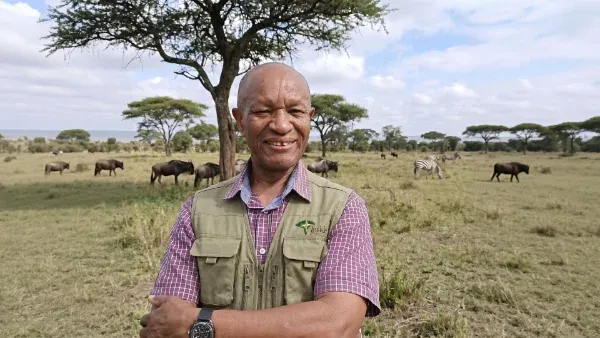
Alex King'oo is KPSGA-certified and has guided Tsavo for three decades. You travel with the person who designs your safari.
No fixed departures. We build the routing to minimise transfer time and maximise time in each park — around your dates and interests.
The guides who know Tsavo well know which families move through the open ground, and where to find the river concentrations that make a Tsavo drive.
Different rather than better or worse. The Mara has higher wildlife density and more predictable sightings — it is optimised for the game drive experience. Tsavo has vastly greater scale, dramatically fewer vehicles, and a landscape that feels genuinely wild rather than managed. For travellers who prioritise quantity and reliability of sightings, the Mara wins. For travellers who prioritise solitude, scale, and the feeling of being in a true wilderness, Tsavo is often the more rewarding choice.
Yes — a 7-day combined itinerary is the recommended approach. Each park warrants at least three nights to do it justice. The parks are separated by the Nairobi–Mombasa highway and the journey between lodges is typically 1 to 2 hours depending on your specific camps. We build the routing to minimise transfer time and maximise time in each park.
The red colouration is most vivid in the dry season when dust-bathing is most frequent and the red laterite soil is dry and loose. After significant rain, the same elephants are noticeably less red — the rain washes the soil off. The peak dry season (August to October) produces the deepest colouration; January to February is also good. During the long rains, the elephants can appear almost normal grey.
The maneless or reduced-mane trait is well-documented but not fully explained. Current research suggests it may relate to higher ambient temperatures (a full mane is hot to carry in Tsavo's heat) combined with the demands of hunting in denser bush, where a heavy mane may be a disadvantage. A genetic component in certain Tsavo populations is also possible. The 1898 man-eaters are the most famous examples, but maneless males are seen throughout the park today.
Tsavo East is roughly 3 to 4 hours by road from Nairobi or 2 hours from Mombasa. Tsavo West is roughly 4 to 5 hours from Nairobi or 1.5 hours from Mombasa. Both parks have airstrips served by domestic flight from Wilson Airport Nairobi (about 45 to 60 minutes). For travellers combining Tsavo with the coast, road transfer from Mombasa is often the most practical option for Tsavo West.
Tsavo rewards the traveller who understands what they are choosing — vast scale, fewer sightings per drive than the Mara, and a wilder, less managed experience. For a first-time visitor whose primary goal is maximum sightings with high predictability, the Mara is the better starting point. For a first-time visitor drawn to wilderness rather than density — who finds having the landscape almost to themselves more appealing than concentrated game drives — Tsavo can be the perfect first safari.
Tsavo is the destination I recommend to guests who have done the Mara and want something genuinely wild. Tell me what you're looking for and I'll tell you honestly whether Tsavo East, Tsavo West, or both is the right answer for your dates.